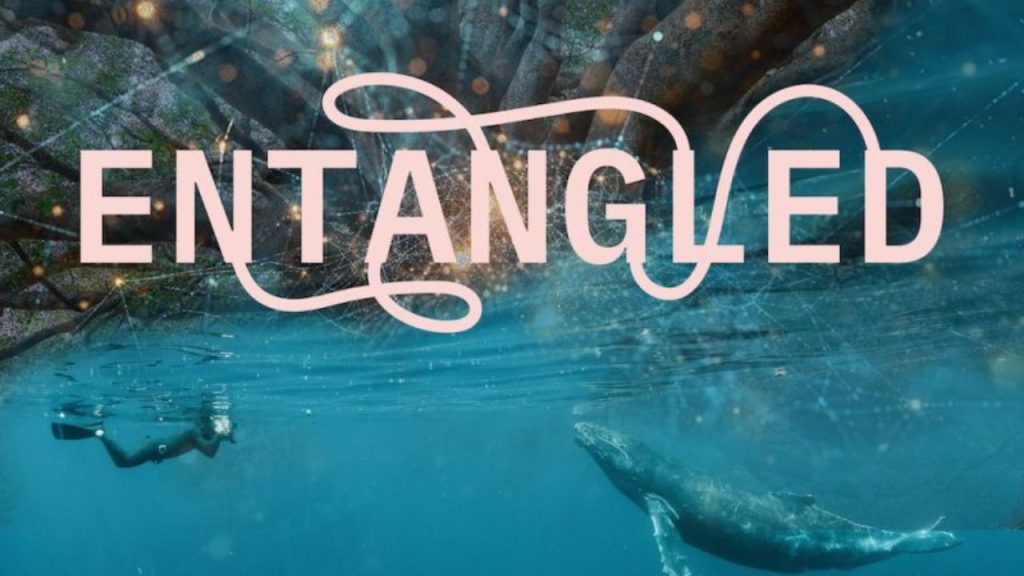
Entangled: A new documentary to explore AI, climate change and conservation
Author
Date 26 September 2025
A new Australian documentary is set to ask one of the most pressing questions of our time: Could the rise of AI nurture — rather than exploit — the living world?
Entangled, directed by filmmaker Jeni Lee from ARC Centre of Excellence for Automated Decision-Making and Society (ADM+S), will explore technology’s entanglement with climate change and conservation. The long-form documentary is scheduled for completion in late 2026 with release anticipated in late 2026 or early 2027.
Lee is currently editing two short case study films that will premiere this year ahead of the long form film release.
AI is often seen as a solution to global challenges, but its hidden costs are mounting. From minerals mined, vast energy and water consumption to offshore e-waste dumping and outsourced labour, its lifecycle raises serious ethical and environmental concerns. The dominant response to climate change, tech-driven fixes, often deepens inequality and disconnects us from nature rather than addressing root issues.
“We cannot consume our way out of the climate crisis, but we can rethink AI. By prioritising sustainability, ethics, and human values such as care, technology can serve both people and the planet rather than depleting them,” Lee said.
The documentary will bring together expert interviews, scientific research, and stories from across Australia to argue for a shift away from endless growth and toward interconnection by embedding intentional design, ethical oversight, and inclusive collaboration.
The film spotlights::
- Listening to Whales
Marine scientist Dr Olaf Meynecke is uniting citizen scientists, Google AI, and marine biology to decode whale migration paths. His research uses underwater microphones to track humpback whales, revealing how they respond to climate change and noise pollution—insights that could help protect ocean life.
In 2025, Dr Olaf will lead a team embedding hydrophones along Australia’s East Coast, using AI to translate whale communication. His mission is clear: by truly listening to nature, we can collaborate with technology and other species to safeguard our oceans. - Watching Over Forests
Wilderness Society scientist Rachel Fletcher helped develop Watch on Nature, a citizen-powered platform exposing deforestation by the beef, paper, timber, and mining industries. Using Sentinel-2 satellite imagery, citizen scientists track land clearing in real time, with drones verifying illegal activity to hold governments and corporations accountable. Now, the Wilderness Society is developing an automated tool to scale up vegetation change detection.
Olaf and Rachel understand that AI is not a magic bullet. They approach AI tools with a critical eye, weighing both the challenges and benefits of integrating these emerging technologies into their work.
Research Team
Filmmaker Jeni Lee; Produced by Bianca Vallentine; Research consultant: Sarah Pink; Story Consultant Ashlee Page
This documentary is part of the ADM+S project ADM, Ecosystems and Multispecies Relationships.
For media inquiries, contact Jeni Lee, jeni.lee@monash.edu