
From TikTok and Instagram feeds to WhatsApp groups: how migrants navigate Australia’s digital information ecology
Author ADM+S Centre
Date 9 October 2026
New research reveals how migrants navigate a fragmented digital information ecosystem of social media, messaging apps, government websites and AI tools, and highlights opportunities to strengthen access to trusted information and support.
For Indonesian Working Holiday Makers, the journey to Australia often begins with an influencer appearing in their feed.
As Australia’s migration system is undergoing significant change – policies, visa pathways and migration priorities continue to shift – migrants face an increasingly complex task in finding out what has changed, understanding what it means for them, and deciding which information to trust.
Research from the ARC Centre of Excellence for Automated Decision-Making and Society (ADM+S) at The University of Sydney is examining how digital platforms are shaping the way migrants find, interpret and verify information.
Drawing on fieldwork with Indonesian Working Holiday Makers across Australia, ADM+S Research Fellow, Dr Udiana Dewi, examined how migrants move between social media, government websites, search engines, generative AI, and messaging platforms as they navigate different stages of their migration journey.
Dr Dewi said her research identified that migrants are navigating a fragmented digital information ecology.
“While official information is available, many migrants find it difficult to navigate and apply to everyday decisions,” said Dr Dewi.
“This has made social media, influencers, AI, and community groups a part of an information infrastructure that makes migration information more accessible, although the information circulating through these channels is not always reliable.”
“Platform algorithms further complicate this environment by making highly engaging and unrealistic migration content more visible than the realistic accounts of precarious working condition and everyday struggles experienced by working holiday makers in Australia”.
The research was explored at the Navigating Migration in the Digital Age seminar and workshop, co-hosted by ADM+S and the Sydney Southeast Asia Centre (SSEAC) at the University of Sydney on 18 September.
The event brought together researchers, migrants, content creators, community organisations and experts to examine how migrants navigate digital information and how the systems around them could become more accessible, inclusive and trustworthy.
A migration journey across multiple platforms
For many prospective migrants, social media is one of the first places they encounter information about living and working in Australia.
A prospective migrant might first stumble across a TikTok video or Instagram Reel about working in Australia.
Comments and links, then, lead to Telegram groups, where people exchange information about applications and preparation. Government websites become important as plans develop, while search engines and generative AI are used to search, summarise and clarify information.
Migrants then turn to peers and content creators to cross-check what they have found. As departure approaches, destination-specific WhatsApp groups emerge. Then, after arrival, Facebook and WhatsApp communities become everyday sources of information about work, housing, transport and life in Australia.
These networks are particularly significant for Working Holiday Makers, who have limited formal support structures and frequently move between jobs and regions. Questions about visas, employment, accommodation, transport and workplace conditions are often worked through digital networks.
The research also found that official information can present linguistic and digital navigation challenges.
One participant explained:
“The information from the Australian government is just too much… I tend to go to influencers instead. Sometimes they have already summarised everything into key points.”
In such cases, influencers play a role in translating complex information into familiar language, connecting it with lived experience, and making it easier to use. This gives content creators an important position within the migration information ecology. For some prospective migrants, social media content becomes the entry point where the possibility of migration is first encountered.
Fighting the algorithm: the ‘vicious cycle’
The research also raises questions about what happens when migration information is filtered through algorithmically organised platforms.
Dr Dewi found that participants distinguished between “humble” influencers, who shared the difficulties and uncertainties of migrant life alongside its opportunities, and “flexing” influencers, whose content focused on high salaries, branded goods, travel and lifestyle transformation.
Some participants described this unrealistic content as “sugar-coated”.
Content creators themselves described another problem that the information they consider most responsible or realistic is not necessarily the information that travels furthest.
One research participant described this as a “vicious cycle”: content using strong hooks attracts attention and engagement, engagement then increases algorithmic recommendation and visibility. Greater visibility then creates incentives to reproduce similar forms of content.
As one content creator described:
“The content that gets high engagement [and] recommended by the algorithm, usually starts with a really strong hook. But the hooks that go viral in Indonesia can also be misleading. For example, ‘You can earn one billion rupiah a year working in Australia.’ Those kinds of hooks are often selling sweet promises.”
This statement shows how migration information is shaped by questions of platform visibility and algorithm imaginaries. What migrants encounter depends partly on what people choose to share and partly on how platforms organise, rank and recommend that content.
This connects with wider ADM+S research examining recommendation systems as socio-technical systems. Their consequences emerge through interactions between algorithms, users, content, commercial incentives and the contexts in which these systems operate.
Understanding the migration information ecology
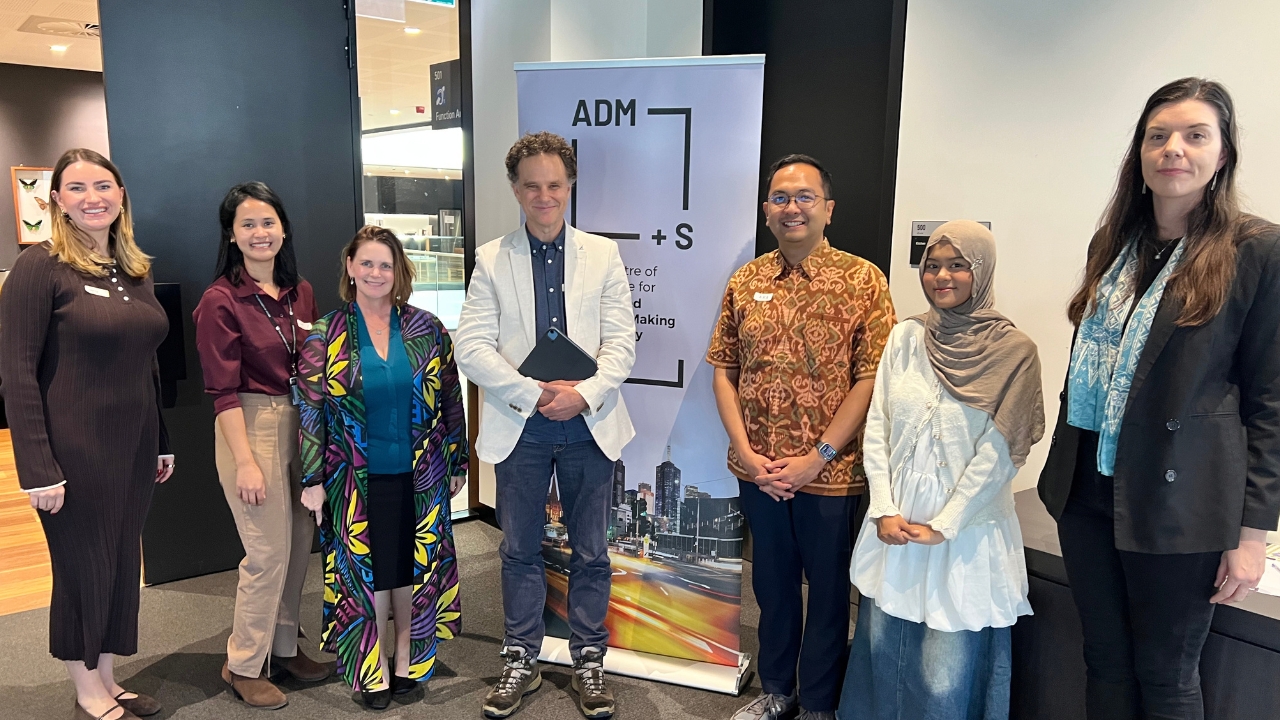
The research was explored alongside perspectives from researchers, migrants, content creators, community organisations, legal practitioners and people with government experience at the Navigating Migration in the Digital Age event.
Professor Heather Horst, Project Leader of the Language and Cultural Diversity in ADM project at the ADM+S Sydney Node, and Associate Professor Jeffrey Neilson, Indonesia Convenor at SSEAC, opened the event.
Dr Donna James and Associate Professor Neilson discussed the contribution of Working Holiday Makers to Australia, including their role in agricultural and regional communities and the precarious conditions that can accompany work and mobility.
Salsabila, an Indonesian Working Holiday Maker and content creator, shared her experience of living in Australia while creating social media content about her experience.
Raka Pamungkas, a PhD researcher at the University of Sydney with more than 13 years of experience as an Indonesian foreign service officer, provided an Indonesian institutional perspective on official information and digital government communication.
Malina Grube from the Immigration Advice and Rights Centre (IARC) discussed access to reliable legal information and introduced IARC’s Immigration Kit: Digital Edition.
Together, the presentations highlighted the range of actors involved in the migration information environment, from government services and professional advice to social media platforms, community organisations, content creators and migrant communities.
From understanding the problem to strengthening connections
Further to these discussions, a dedicated workshop involving 57 participants (in-person and online), including holidaymakers, community organisations, migrant support organisations in Queensland and New South Wales, and researchers from Australian universities, explored how migrants currently navigate this information ecosystem. Participants mapped the sources of information, support and trust that migrants rely on, identified where gaps and breakdowns occur, and considered how stronger connections could be built through the digital and community infrastructures migrants already use.
“The purpose of the workshop was to bring together Working Holiday Makers as experts in their own migration journey, alongside the different actors who produce, circulate, and support migration information,” said Dr Dewi.
“We wanted to understand where information, trust, and support break down across the migration journey, and identify practical ways to strengthen connections between the digital spaces migrants already use and reliable information, expertise, and support”
Nurbaya Dean, a Community Connect Worker in Bundaberg and founder and President of KIBAR (Komunitas Indonesia Bundaberg Region), shared her experience of community digital literacy initiatives supporting migrants and communities in regional Queensland.
Three priorities emerged from the workshop discussion.
- Stronger connections between content creators and trusted experts.
Participants identified opportunities to bring together content creators’ understanding of migrant audiences, languages, formats and platforms with the specialist knowledge of legal practitioners, government agencies, researchers and community organisations.
Bringing these forms of expertise together could help trustworthy information circulate through the spaces migrants already use.
- Using diaspora communities to identify emerging problems
Participants identified Indonesian diaspora Facebook groups as important spaces for recognising emerging concerns. Conversations within these communities can reveal recurring concerns about misleading migration information, questionable practices and problematic employment experiences. - Strengthen links with WhatsApp networks
Participants also discussed strengthening communication between official institutions and WhatsApp networks used by Indonesian communities in Australia. These existing networks could help timely official information reach migrants while providing clearer pathways for community concerns to reach relevant organisations.
Making trustworthy information visible
The research and workshop demonstrate the importance of understanding migration as a digital information problem as well as a policy and mobility issue.
Official information, social media, search engines, generative AI, Facebook, Telegram and WhatsApp all play different roles in how migrants encounter, interpret and verify knowledge. These systems also interact with commercial incentives, community relationships and culturally embedded practices of information sharing.
As Australia’s migration environment continues to change, access to trustworthy information becomes increasingly important.
Migrants need to know what has changed, what applies to them and where they can seek support.
The challenge is not simply making reliable information available. It is making that information accessible, understandable and visible in the digital spaces where migrants are already looking for answers.