

Digital and Data Capabilities for Sexual and Reproductive Health Website
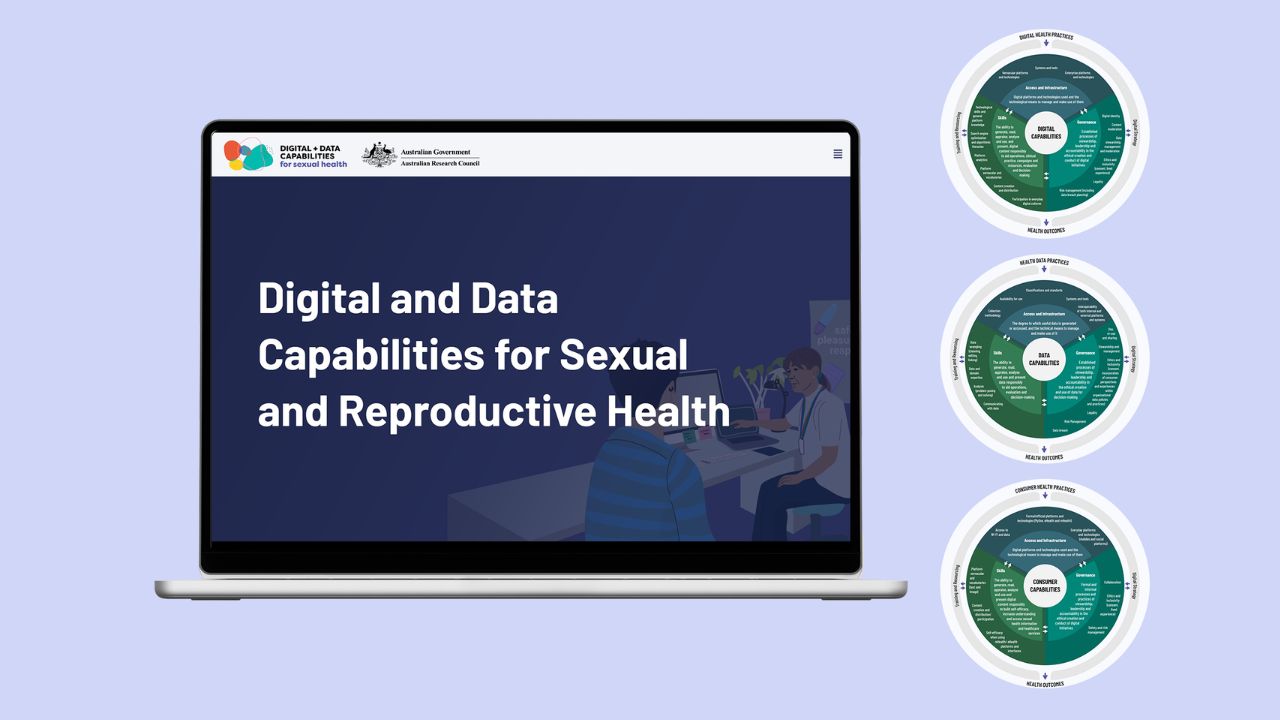
Target Audience: Sexual and reproductive health organisations and workforces
The Digital and Data Capabilities for Sexual and Reproductive Health website provides models and checklists to support digital transformation in sexual and reproductive health organisations and workforces.
PURPOSE
DDCSRH.com is a space for sexual and reproductive health organisations and their workforce to explore strategies for thinking about digital and data technologies in your organisation. These resources are informed by recent research, including interviews and workshops with sexual and reproductive health professionals and health consumers, and a review of relevant literature.
This website hosts three evidence-based models to support strategic conversations about digital transformation in sexual and reproductive health organisations and workforces.
- Digital Capabilities for Sexual and Reproductive Health
- Data Capabilities for Sexual and Reproductive Health
- Consumer Capabilities for Sexual and Reproductive Health
The Digital and Data Capabilities for Sexual and Reproductive health Project is a 4-year programme of research led by Professor Kath Albury. It was funded by an Australian Research Council Future Fellowship.
This site based on two iterative stages of qualitative research. You can read more about these stages in our research reports:
- Digital and data capabilities for sexual health policy and practice: stage one report
- Building digital and data capabilities for sexual policy and practice stage two report
The sexual and reproductive health sector increasingly engages with digital technologies – from health promotion on social platforms to telehealth to online STI testing. The ‘digital transformation of health’ has accelerated since COVID lockdowns, and so has the development of digital health policies. What does this mean for the Australian
sexual health and reproductive health workforce?
This website provides models and checklists to support digital transformation in sexual and reproductive health organisations and workforces.
The Digital and Data Capabilities models build on Data Capabilities research partnerships funded and partially funded by Swinburne’s Social Innovation Research Institute; the Lord Mayor’s Charitable Foundation and the ARC Centre of Excellence for Automated Decision-Making +Society. This research is part of the Critical Capabilities for Inclusive AI project.
Recommended Citation: Albury, K., Mannix, S., Learmonth, C. (2025). Digital and Data Capabilities for Sexual and Reproductive Health. https://ddcsrh.com/
RELATED PUBLICATIONS

Kath Albury, Samantha Mannix (2025). Digital determinants of sexual and reproductive health—workforce perspectives on digital and data literacies. Health Promotion International, Volume 40, Issue 2, April 2025.

Albury, K., Mannix, S. From Digital Health Literacy to a Digital and Data Capabilities Approach to Sexual Health. Sex Res Soc Policy 23, 29–43 (2026).
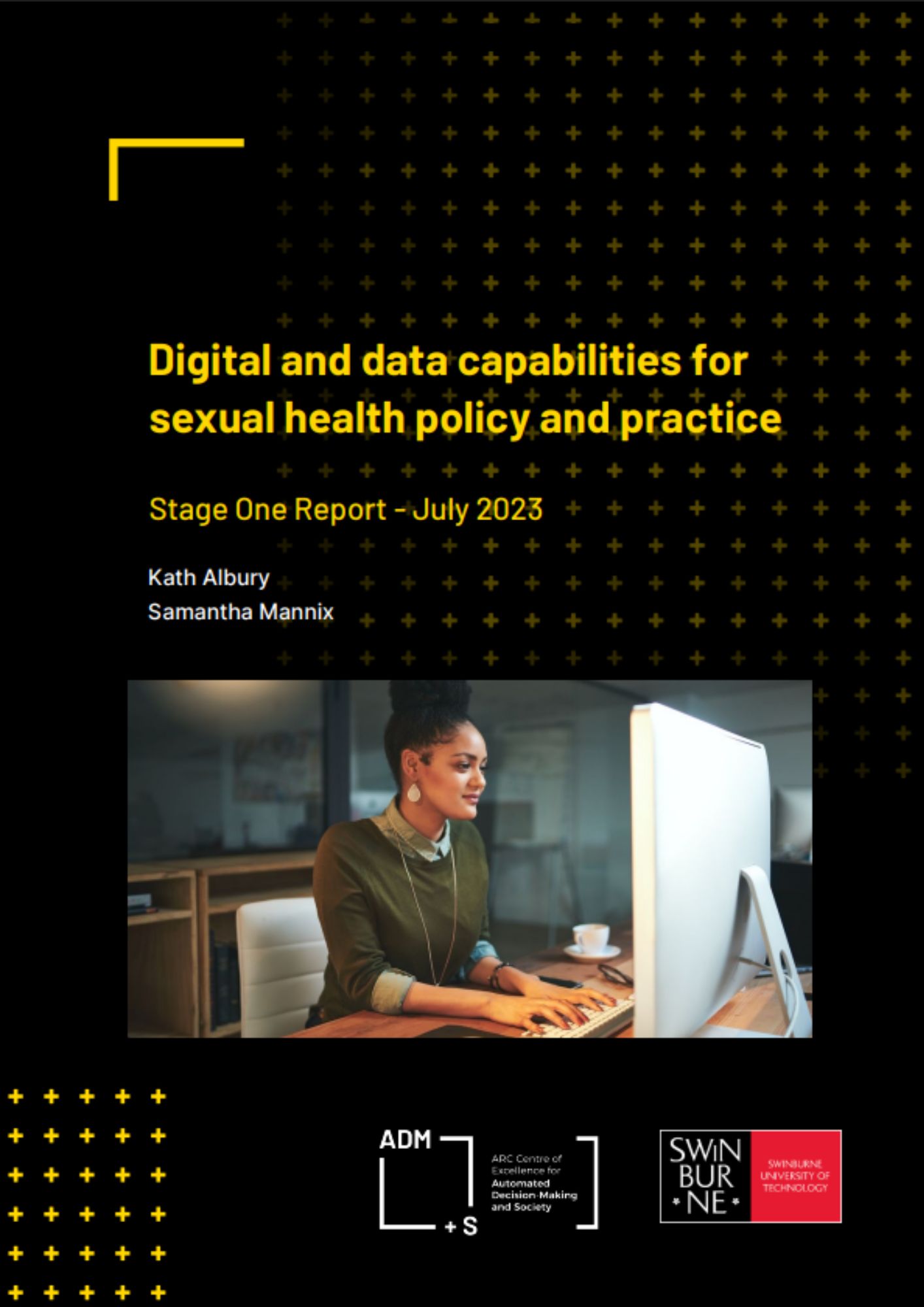
Albury, K. and Mannix, S. (2023) Digital and Data Capabilities for Sexual Health Policy and Practice: Stage One Report. July 2023. Melbourne: Swinburne University of Technology.
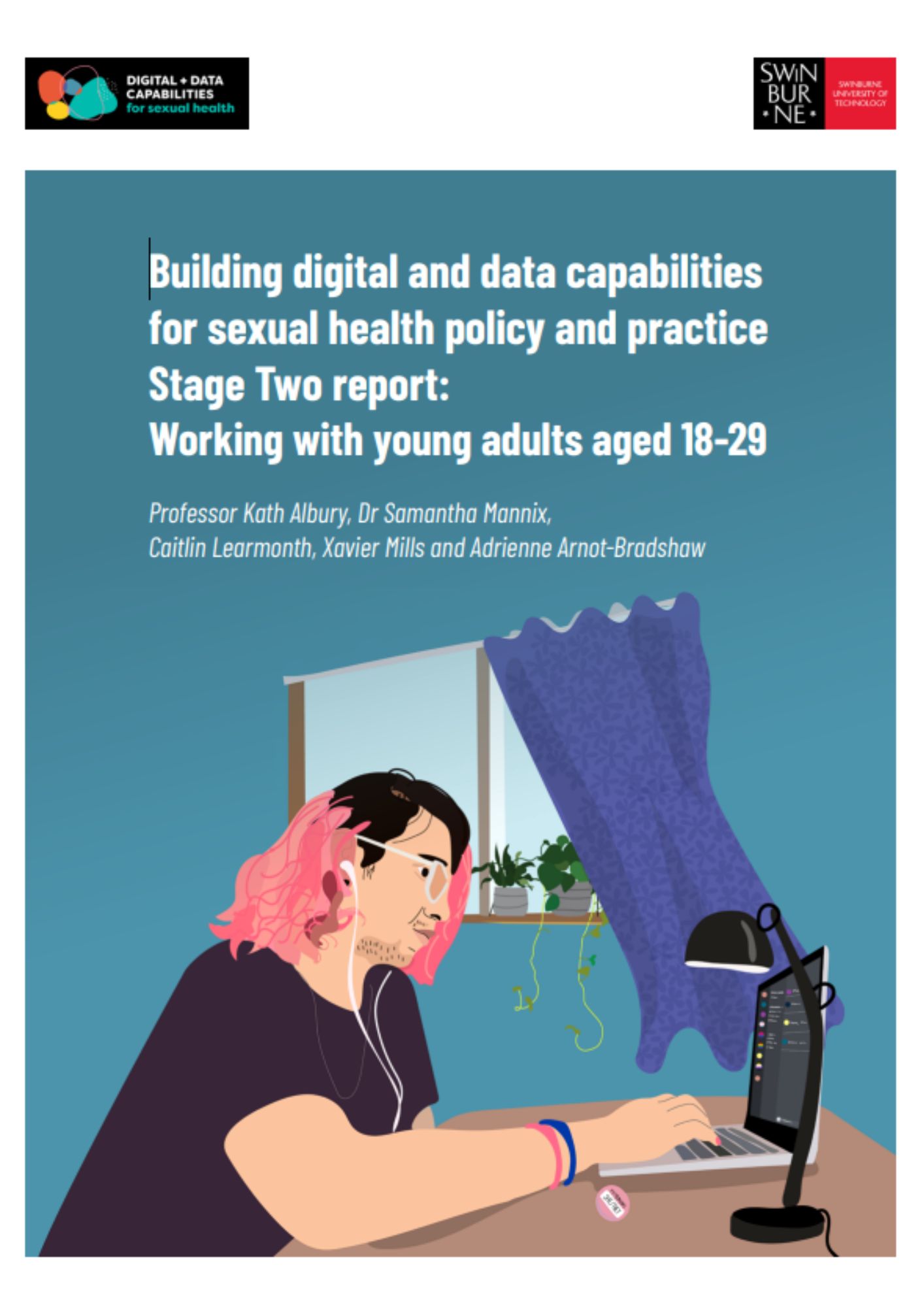
Albury, K., Mannix, S., Learmonth, C., Mills, X. and Arnot-Bradshaw, A. (2024). Building digital and data capability for sexual health Stage Two report: working with young adults (18-29). Melbourne: Swinburne University of Technology.
WEBINARS
Digital and Data Capabilities: new models for sexual health policy and practice – Stage One Report Launch (2023), with Kath Albury, Samantha Mannix, Shelley Kerr and Son Vivienne.
Digital and data capabilities for sexual and reproductive health – what do young adults want from health service providers. – Stage Two Report Launch (2024), with Kath Albury and Samantha Mannix.
‘Re-framing digital sexual health: from individual literacies to workforce capabilities’ – presented by Kath Albury and Samantha Mannix at the UNSW Centre for Social Research in Health and the BBV & STI Research, Intervention and Strategic Evaluation Program (BRISE), November 2023.
Digital Cultures and Sexual Health: research and practice roundtable – with, Kath Albury, Heather McCormack, Jennifer Power, Daniel Reeders and Andrea Waling, 2022.