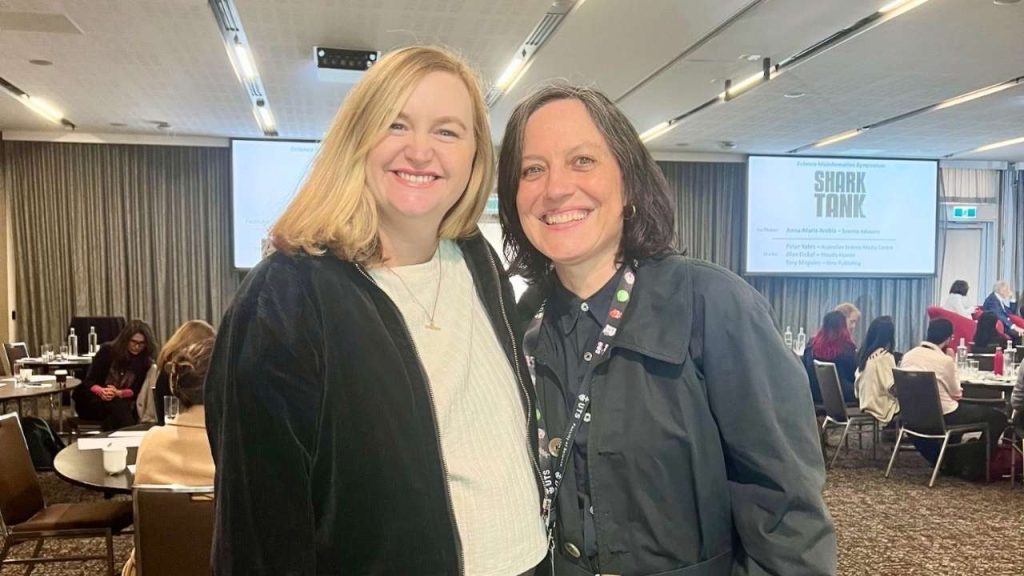
The recent Science Misinformation Symposium highlighted how science is grappling with unprecedented levels of misinformation. Fighting this requires coordinated, cross-sector responses, spanning better incentives for science communication, platform accountability, and new technical and policy tools to protect public trust in science and evidence.
The symposium opened with a focus on the entanglement of science and politics, noting that science’s inherently tentative nature leaves it vulnerable to distortion. Panelists talked about how scientific knowledge is provisional and self-correcting, but this nuance can be exploited by bad actors. When scientists revise, update or change conclusions, it can be weaponised to undermine public confidence in science, blurring the lines between factual evidence and political narrative. These challenges are compounded by fraying social consensus around truth, panelists warned that the ‘democratisation’ of AI tools might supercharge the creation of persuasive false content, further eroding the common ground of shared facts and trust in science.
There was plenty of discussion between attendees about the growing need in Australia for mandatory, auditable regulation rather than a voluntary code. Changes to platform design to favor reliable information by slowing the spread of and removing unverified claims was also a point of consensus.
The latest UK Government proposal to push platforms to give established media companies and trustworthy providers more algorithmic prominence, especially during times of social unrest or crisis, is certainly one to watch closely.
Discussions also examined why certain communities become vulnerable to misinformation, highlighting social identity and isolation as factors. Harmful content often spreads not due to a lack of information, but because individuals gravitate toward messages that resonate with their identity or anxieties. Misinformation is crafted for emotional impact and designed to flourish through memes, targeting personas and exploiting group dynamics. Panelists pointed to research showing disinformation agents using advertising tactics and persona-driven style matching to amplify engagement and sow confusion. This socially engineered approach, combined with gaps in media/digital literacy, especially among older demographics, helps misinformation ‘stick’ in the public mind. The result is polarisation, declining trust in institutions, and tangible real-world harms from health risks to undermined climate action, as people retreat from credible sources.
A recurring theme was the need to redesign incentive structures and oversight in today’s information ecosystem. Panelists argued that the current research publishing economy, with its emphasis on high output and citation counts, can inadvertently foster poor practices, requiring reforms to reward quality, transparency, and correction rather than volume. Similarly, digital platforms must be accountable for how they amplify misinformation.