ADM+S Hackathon navigates the “Wicked Problems” of search
Author
Date 14 November 2025
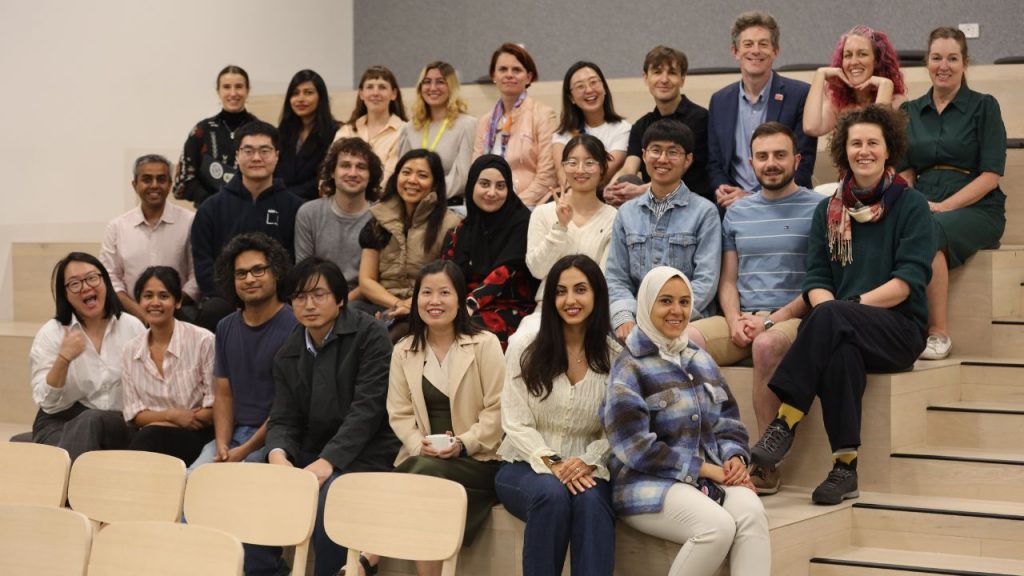
Five teams from the ARC Centre of Excellence for Automated Decision-Making and Society (ADM+S) members took part in the centre’s annual Hackathon, this year exploring how search systems enable and constrain diverse social groups navigating complex, real-world challenges.
Participants focused on developing new methodological approaches to help gain a deeper understanding of how search systems enable and constrain diverse groups facing “wicked problems”.
During the two-day challenge, participants worked in teams to select a “wicked problem” and construct two to three concise personas representing individuals who might seek information related to that issue.
The Hackathon challenge was developed by Kateryna Kasianenko, Dr Ashwin Nagappa and Dr Oleg Zendel and based on work from the Australian Search Experience 2.0
“One of the goals behind the hackathon was to get the ADM+S community more comfortable with being uncomfortable in interdisciplinary settings, and we are confident that everyone, from participants to judges, has gotten at least one step closer to this goal,” said Kateryna Kasianenko.
“It was great to see how these perspectives not only co-existed, but informed each other in several projects.”
Oleg Zendel said that the mix of perspectives made the work exciting and it was valuable to see search through new lenses.
“What stood out to me was how people from different fields approached the same search evaluation challenge in completely different ways,” he said.
On day one, teams were asked to identify a “wicked problem” and produce 2-3 concise representations of people who may be searching for information related to it.
Using data from open online communities, discussions with peers, and insights from external stakeholders, teams generated 15–60 realistic search queries that reflected the behaviours and contexts of their personas.
The winners of the day one challenge were Khanh Luong (RF, QUT), Kieran Hegarty (RF, RMIT) and Futoon Abushaqra (Affiliate, RMIT). The team highlighted the wicked problem of the disconnect between children’s curiosity and the age-gated digital systems with search functionality. They proposed to classify children’s search queries based on the level of risk they may present to the child and those around them, illustrating the typology through realistic examples, complemented with detailed examination of search results.
On day two, teams used the queries from day one to either develop an approach to evaluate the search results collected from Google for the queries they produced; or develop a prototype or an approach to collect and evaluate search results from other platforms relevant to the personas.
The winners of the day two challenge were Shuoqi Sun (Student, RMIT), Fletcher Scott (Student, RMIT), Rayane El Masri (Student, QUT), Utami Kusumawati (Affiliate, RMIT) and Kun Ran (Affiliate, RMIT). Their project focused on the information needs around natural disasters, with particular attention to the global/local dimension in both queries and search results.
Through a mixed-methods approach, the team demonstrated that queries that strongly connect to a particular place still tend to return more general, globalised results. Such results focus on risk reduction strategies rather than enabling communication and decision making specific to a place. This finding highlighted an important gap in search engines’ response to unfolding disasters.
Throughout the Hackathon, mentors and team leads from across the Centre provided support in areas including information retrieval, computational social science, and internet studies.
Ashwin Nagappa commented, “I think there were several serendipitous moments when participants pivoted and explored new ideas, which led to organic bonding and ideas for publication.
“It was heartening to see how much everyone valued the two days together.”
The findings, processes and methodological insights from the Hackathon will be documented in a collaborative paper. All participants have been invited to join as co-authors, offering a valuable opportunity for contribution to shared research across the Centre.
The event was organised by the ADM+S Research Training Committee.