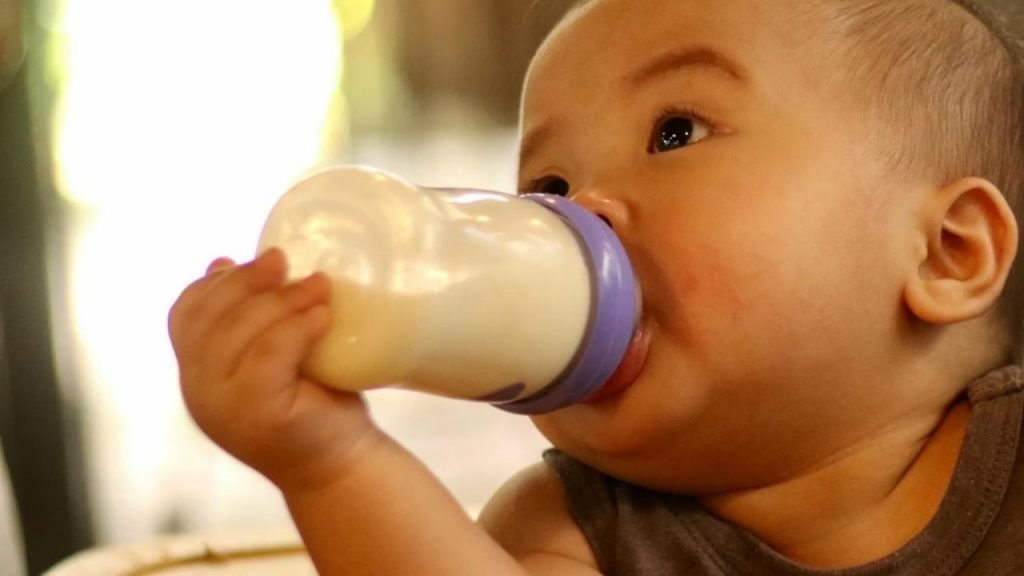
Recently, the federal government released a consultation paper seeking input on whether it should introduce legislation to prevent or restrict infant formula marketing in Australia. The consultation is open for submissions until April 10.
Until February 2025, Australian formula brands were under a voluntary agreement not to advertise formula products for babies aged 0 to 12 months, in order to support and protect breastfeeding.
With recent data revealing lower-than-desired rates of breastfeeding in Australia, the government has chosen not to renew the voluntary arrangement and is exploring tougher measures.
These moves don’t explicitly promote breastfeeding. Rather, they aim to curtail marketing practices that position formula as an equivalent or preferable alternative.
Our analysis of online formula ads targeting parents in Australia reveals how companies prey on parents’ anxiety – and the problems with having a voluntary agreement.
What’s wrong with advertising formula?
Breastfeeding has extensive health benefits for both mother and child. These include protection against gastrointestinal and respiratory infections for newborns, reduced risk of obesity and type 2 diabetes later in life, and reduced risk of mothers developing ovarian and breast cancer.
Because of this, Australian guidelines recommend exclusive breastfeeding for the first six months. The World Health Organization recommends continued breastfeeding for the first two years.
However, while breastfeeding rates are high at birth in Australia, they quickly drop. Only 37% of babies were reported to have been exclusively breastfed by six months in 2022.
There are various reasons why mothers choose not to breastfeed, but the advertising of formula products is a concern. It’s been shown to confuse parents about the nutritional benefits of formula versus breastmilk, reduce breastfeeding initiation and duration, and present formula as a more favourable solution in the face of breastfeeding challenges (many of which can be overcome with the right support).
Formula is valuable. It’s often an essential option for those unable to breastfeed. However, it’s also expensive and can financially strain families, particularly during the first year of a child’s life.
Online advertising also operates very differently from traditional ads. Online, ads target people based on their searches, browsing histories or life events. They can reach new or expecting parents precisely when they might be most uncertain or vulnerable to suggestion.
What do the ads for infant formula say?
The ADM+S Australian Ad Observatory, which we and our colleagues run, collects data on the ads Australians encounter online to better understand how digital advertising systems operate.
In 2022 we collected ads from 1,200 Australian adults who voluntarily installed a plug-in on their browser to scrape ads while they were scrolling Facebook. From 2025 we’ve been collecting ads from around 300 Australians. They use an app to share the ads that appear while they scroll Facebook, Instagram, TikTok and YouTube on their phones.

Supplied
For this analysis, we examined ads collected in both years, and identified a total of 158 ads promoting formula products from local and international brands.
We found brands used various tactics to appeal to parents. Some highlighted positive customer reviews or offered free downloadable cookbooks and “house baby proofing” guides.