Automation and the future of human and planetary health
Author ADM+S Centre
Date 4 November 2026
Automated decision-making and AI are increasingly reshaping human health, wellbeing and environmental futures, raising critical questions about how these technologies should be designed, governed and regulated.
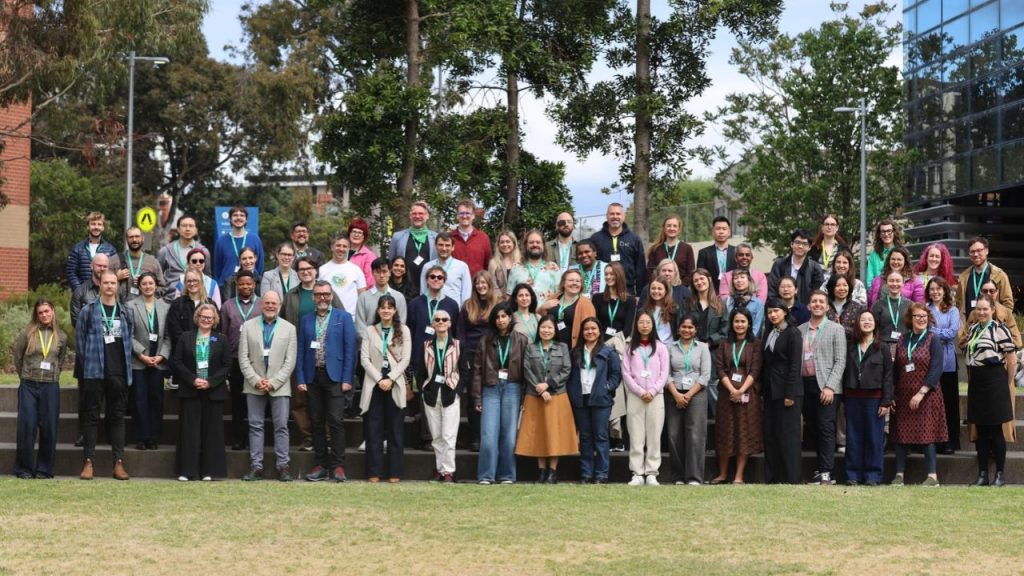
These issues were the focus of the 2026 ADM+S Annual Symposium: Automated Human + Planetary Health, which brought together researchers, industry representatives and community stakeholders at Monash University’s Caulfield campus from 27–29 October.
Distinguished Professor Julian Thomas, Director of the ADM+S, said “Automated systems now provide health advice, influence the way care is delivered and frame our understanding of the environmental costs of computing.”
“This year’s symposium brought together researchers, practitioners and communities to explore not only the capabilities of these technologies, but also how they should be governed in the public interest.”
The symposium showcased the Centre’s interdisciplinary research in the Health Focus Area at the intersection of humanities, social sciences and technology, exploring the complex relationships between technology, human and planetary wellbeing.
Topics included AI in healthcare, cultures of risk in online advertising, platform governance, digital infrastructure and the environmental implications of emerging technologies.
Plenary sessions, panels and performances explored how automated technologies are shaping human and planetary health, highlighting both the opportunities and challenges they present.
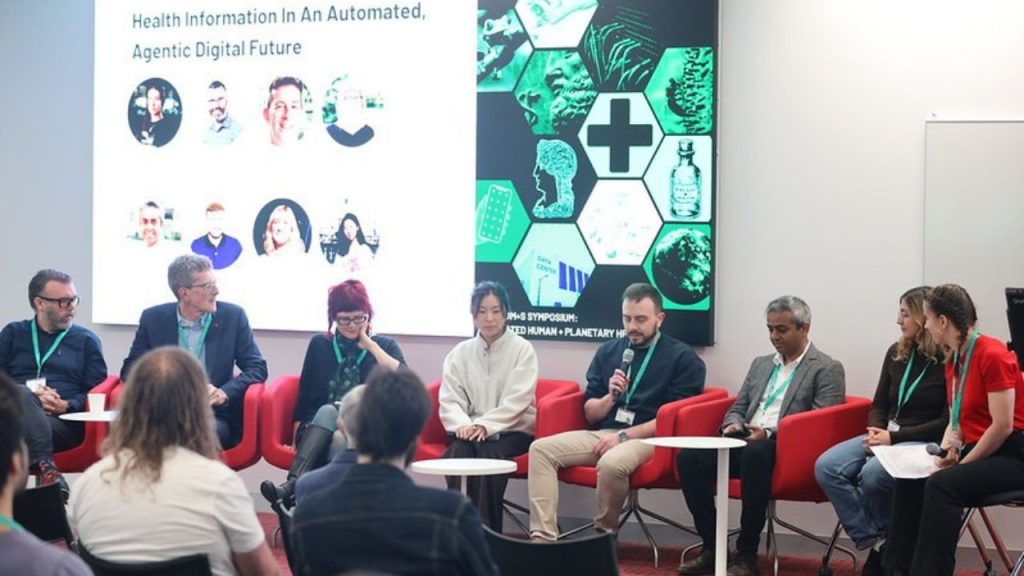
The opening plenary, featuring Kateryna Kasianenko, Daniel Angus, Mark Sanderson, Ashwin Nagappa, Oleg Zendel, Sara Allawati, Jiaman He and Kath Albury, examined how people use digital platforms, search engines, social media, chatbots and wearable technologies to seek health information, from everyday wellbeing advice to guidance on serious illness and injury.
Drawing on research from the Australian Search Experience 2.0 project, the panel examined how commercial interests and search algorithms influence the health information people encounter online.
Speakers highlighted the prominence of commercially driven content, the visibility of potentially outdated or decontextualised information, and the risks of algorithmic bias. Examples included alcohol promotions appearing in search results for adolescents and concerns about the quality and reliability of online infant nutrition information.
Another panel brought together ADM+S researchers Lucinda Nelson, Sadia Sharmin, Anjalee de Silva and Emma Quilty to examine how emerging technologies are reshaping the nature and dynamics of gender-based violence.
The panel discussed how perpetrators use AI and automated tools to exert control over women and girls, how digital platforms shape public conversations about intimate partner violence, and how foundation models can contribute to or challenge harmful narratives. They also considered how AI tools could support research into gendered violence and inform efforts to create safer digital environments.
Digital Duty of Care: shaping a safer and more accountable digital society
The symposium also explored the policy implications of automated technologies through a facilitated panel discussion on Australia’s proposed Digital Duty of Care, featuring Kath Albury, Maša Popovac, Christine Parker, Calvin Collins, and Daniel Angus.
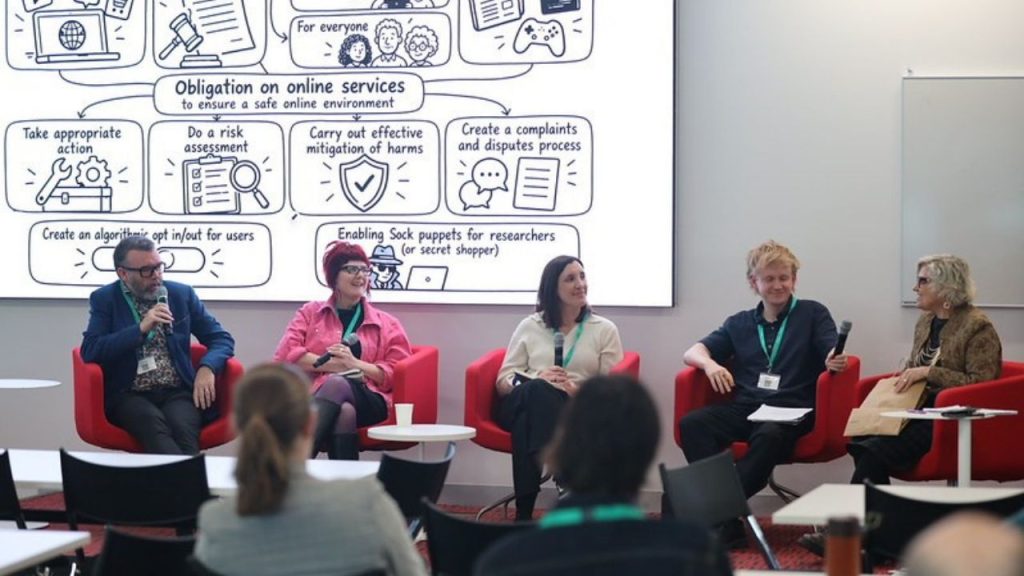
Against the backdrop of the Australian Government’s proposed legislation, the panel explored how a Digital Duty of Care could move beyond a narrow focus on online safety and harm prevention to support a broader vision of a ‘good’ digital society, one that promotes individual and collective wellbeing, protects people’s rights to participate online and delivers long-term public value.
Discussions focused on the importance of meaningful transparency and accountability, and how researchers, civil society organisations and regulatory bodies could contribute to monitoring digital platforms and shaping their responsibilities.
The panel also highlighted the importance of incorporating community perspectives and lived experience into the development and implementation of digital regulation, generating practical insights for researchers, policymakers and civil society.
Together, the symposium sessions and discussions highlighted how automated technologies shape access to information, influence individual decision-making and intersect with broader issues of platform governance, algorithmic accountability, commercial interests, online harms, gender equity and human rights.
These discussions reinforced the importance of collaborative approaches to ensuring technological innovation delivers equitable and sustainable benefits.
HDR Student Poster Competition
The symposium also celebrated emerging research talent through its annual HDR Student Poster Competition, recognising outstanding research by ADM+S PhD students.
Congratulations to this year’s winners:
- Judges’ Award
Nethmi Wijesinghe, RMIT University (1st Prize): When AI Joins The Crowd - Honourable Mention
Alisha Aprilia, University of Queensland (2nd Prize): What Counts on the Platform?
Artists Take on AI and the Environment
As part of the 2026 ADM+S Symposium, the public event Artists Take on AI and the Environment brought together artists Angie Abdilla, Laresa Kosloff and Rebecca Najdowski in conversation with Bronwyn Bailey-Charteris for an evening of film screenings and critical discussion at Melbourne’s Capitol Theatre.
The event explored how contemporary artists are responding to generative AI, examining the environmental implications of these technologies and how creative practice can be used to question, challenge and reimagine their impacts on people, communities and the natural world.
Through a series of thought-provoking works, the artists reflected on themes including digital identity, climate change, Indigenous knowledges, ecological responsibility and the ethics of AI. Together, the screenings and discussion offered diverse perspectives on the cultural, environmental and social consequences of an increasingly automated future.
We thank the event organising team: Professor Deborah Lupton, Professor Anthony McCosker, Professor Nicholas Carah, Professor Kath Albury, Dr Bronwyn Bailey-Charteris, Dr Giselle Newton, Nicholas Walsh, Til Knowles and Matt Warren, whose efforts helped create a vibrant forum for exploring the future of automated human and planetary health.
View the 2026 ADM+S Symposium photo album on ADM+S Flickr